I am the Research Director for the National Zoning Atlas (NZA), a 501(c)(3) non-profit organization that is building the most extensive, detailed, and reliable repository of standardized zoning data in the US. So far, our group has collected, digitized, and mapped zoning information for over 8,000 jurisdictions covering over half the population and land in the country. Check it out below.
See Atlas on NZA Website
Zoning Snapshots
In addition to helping build the Atlas, I have also helped generate the NZA’s Zoning Snapshot series and produced a first-of-its-kind statewide zoning report for Colorado. This report and the attendant data visualizations summarize how zoning rules like allowed unit densities, minimum lot sizes, accessory dwelling unit (ADU) rules, and minimum parking requirements break down across jurisdictions.
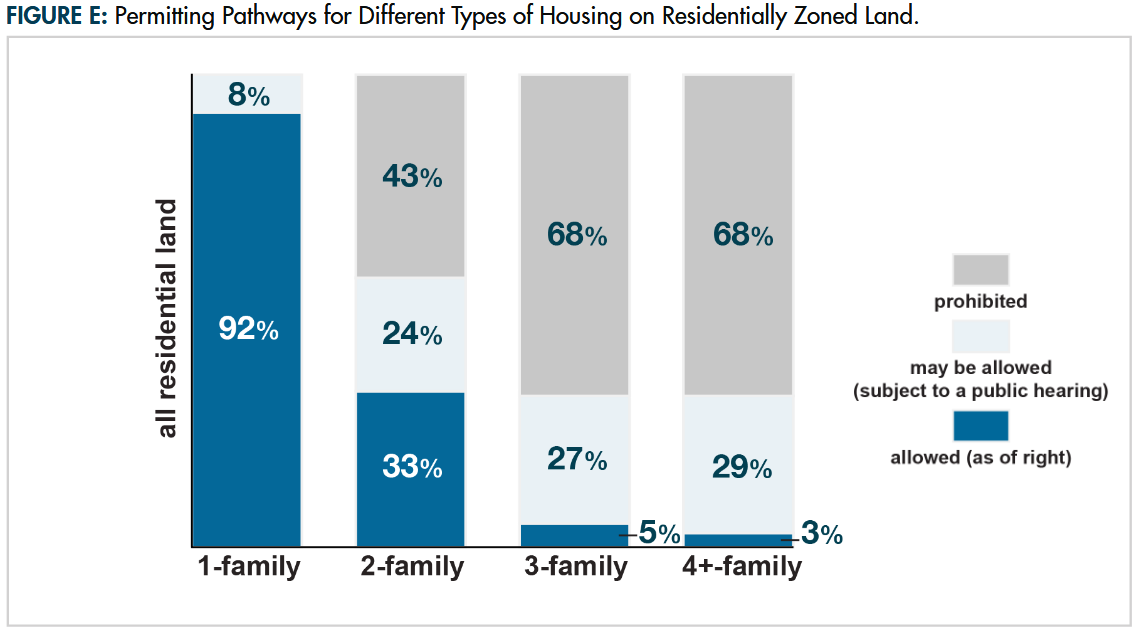
For example, looking at the snapshot figures from our Colorado Report below, we can see that across Colorado’s 259 jurisdictions that exercise their zoning power and have made their data available to the NZA, single-family housing is allowed by right on a full 92% of the residentially zoned land. However, multifamily housing with four units or more is only allowed as of right on a mere 3% of Colorado’s residential land.
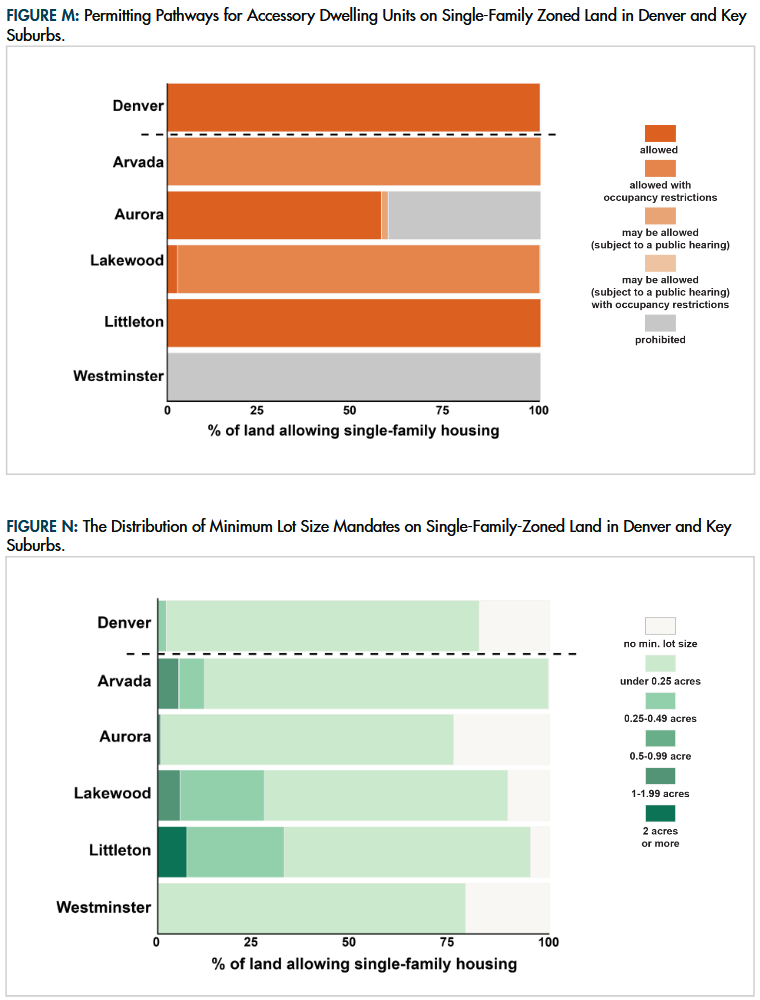
Our snapshot stats also summarize ADU and minimum lot size rules. With NZA data, it is possible to compare these land use regulations across different places. For our Colorado Report, I compare ADU and minimum lot size requirements between Denver and five of its major suburbs. The results show some considerable variability between places. As the figure below illustrates, Denver and Littleton both allow ADUs as of right without any occupancy restrictions on all of their single-family land, whereas Westminster prohibits ADUs on all of this land.
Minimum lot size rules also vary between Denver and its suburbs. Denver, like most major cities, enforces fairly small lot requirements for single-family homes, mostly under a quarter acre. However, in suburbs like Lakewood and Littleton, a sizable share of their single-family land requires lots to be at least half an acre. Larger minimum lot sizes encourage environmentally destructive sprawl and inflate home prices, affecting affordability not just in these municipalities but across the metropolitan region.
These figures represent just a few of the insights that the NZA’s unique dataset makes possible. I am currently working to expand the types of questions it can help answer.